Put your name in front of Asia’s insurance market.
More than 40,000 individuals a month rely on (Re)in Asia for trusted journalism, in-depth intelligence, and a reading experience tailored to their role.
 Key storiesFeaturesData insightAnalysisPeople movesReinsuranceSpecialtyRegulation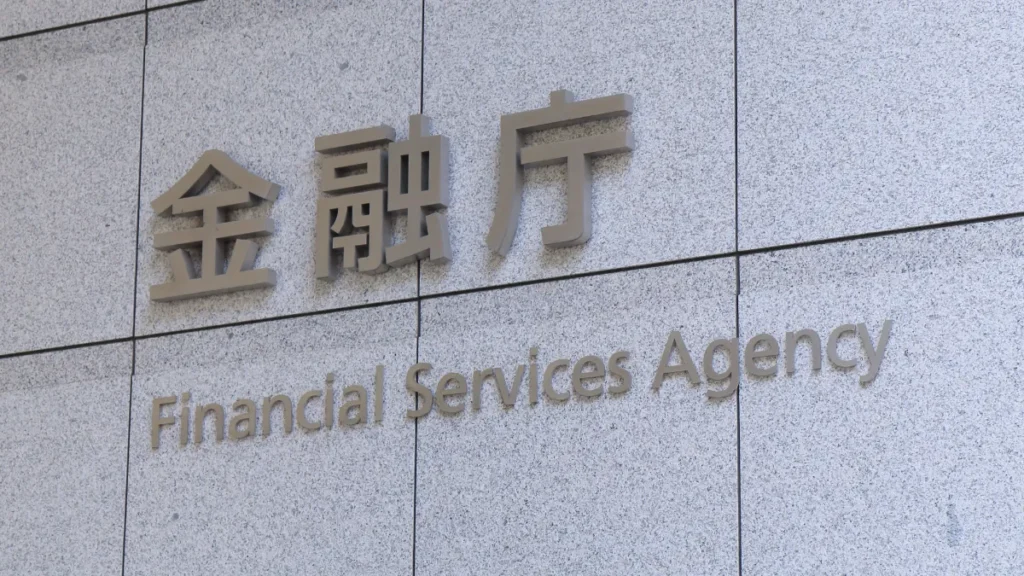
Japan FSA suspends Prudential Life, Gibraltar Life sales over widespread misconduct

IRDAI mulls early-2027 implementation for distribution reforms

CPIC HK’s liquidity improves on cut in high-risk assets as S&P affirms ratings

Australia’s ban on using genetic testing in life insurance takes effect

HDI Global appoints Kei Kimura as general manager of distribution and marketing

Swiss Re Corporate Solutions hires Adnan Bhat for APAC network management role
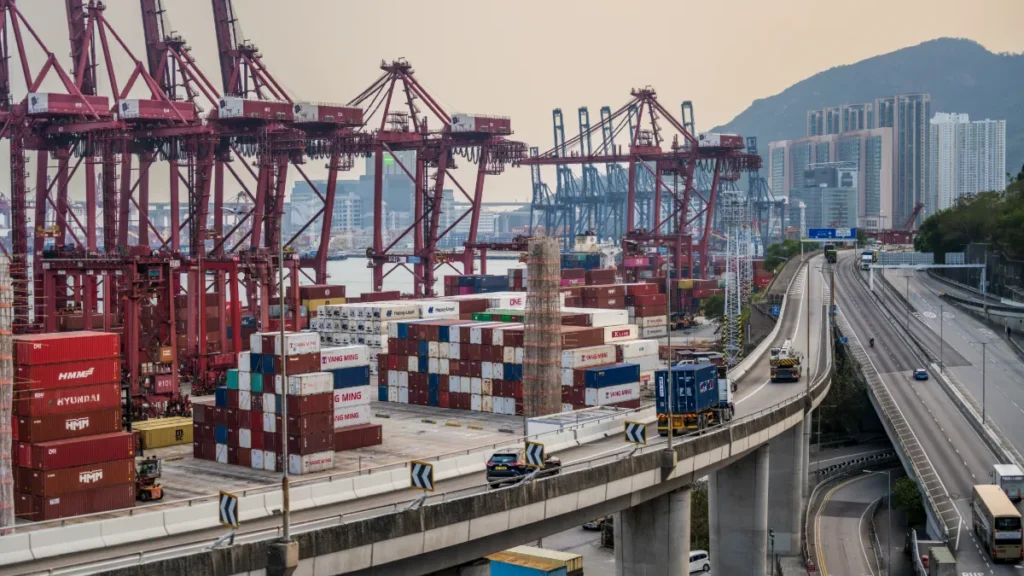
Hong Kong extends mandatory motor, employees’ compensation cover to Huanggang Port area
 AboutContact usAdvertiseAwardsFree trialSubscribeSearch…Log in
Marine and cargo.
Features and key stories »

APAC facultative demand climbs, but margins will be earned on terms
Facultative is evolving from an overflow tool into a strategic one, but with capacity plentiful, reinsurers are being asked to do more for less.
 Partner contentWhy Asia’s construction risks no longer stop at the weather
Latest »
Editor’s choice »



All stories »
Meritz Fire & Marine prepares to sell Indonesian non-life insurance unit — reportOctober 7 2026 Hyundai Marine & Fire eyes cyber insurance expansion as part of Japan growth strategyOctober 2 2026APAC facultative demand climbs, but margins will be earned on termsSeptember 29 2026India’s maritime insurance pool hits 3,000 cargo war policies as war-risk premiums fall 35-40%September 28 2026
 Chubb Hong Kong promotes Jeremy Lai and Lulu Tsai to lead cyber and marineSeptember 25 2026China powers Asia’s marine insurance gains as region narrows gap with Europe – IUMISeptember 23 2026
 ISO-compliant bunker fuel raises stakes for marine insurance claimsSeptember 23 2026
 HDI Global hires senior property, marine and distribution talent in Hong KongSeptember 21 2026
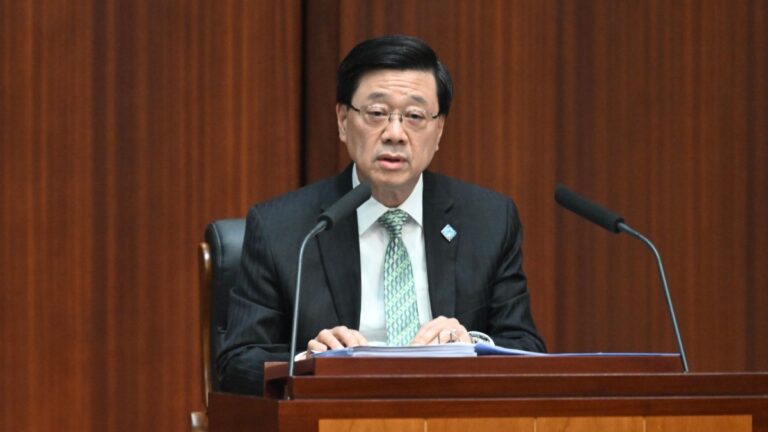 Hong Kong targets captives, ILS and specialty insurance growth under first five-year planSeptember 16 2026
 BRICS backs reinsurance capacity talks, India offers GIFT City for risk labSeptember 15 2026
IUMI Singapore 2025
 APAC marine insurance soft cycle to persist until 2027 despite geopolitical risks, tariffs
 Asia drives global cargo insurance growth but trade fragmentation reshapes risk landscape
 Multifold impacts from tariffs, trade barriers dominate IUMI discussions
 IUMI 2025 wrap: Marine insurers chart new opportunities amidst changing tides in geopolitics and macroeconomics
 Marine insurers urged to harness data for political risk pricing
Independent journalism and market intelligence for Asia’s insurance and reinsurance community.
AboutContact usAdvertiseAwardsFree trialSubscribeSearch…Log in
Rebuilding
APAC’s healthcare
insurance model
As healthcare affordability reaches a crisis point, markets are exploring more sustainable ecosystems.
Forewords & Key Findings
About this whitepaper
This whitepaper was researched and written by (Re)in Asia with an editorial-first approach.
It is free to read without a subscription through our commercial partnership with Your brand.
In this report01The rising cost of care02No single APAC market03Demand is changing as fast as cost04Move from blunt repricing to precise intervention05Build the healthcare ecosystem, not just the policyTowards a sustainable model

As healthcare costs continue to rise across Asia Pacific, insurers, providers and governments are facing growing pressure to maintain access to quality care while keeping coverage affordable and sustainable.
The challenge is complex. Medical inflation is being driven not only by the rising cost of treatments, but also by ageing populations, increasing prevalence of chronic disease, and greater utilisation of healthcare systems.
There is no single solution. Rather, the sustainability of healthcare insurance depends on a combination of smarter product design, more sophisticated underwriting and more efficient use of healthcare resources.
Finding common ground
Healthcare and its access are such a hot topic. Against the backdrop of an ageing population, advancements in medicine, and growing care expectations, the cost of healthcare has risen rapidly in recent years.
As a stakeholder to the ecosystem, insurers are under the spotlight. Insurers play an important role. They offer products that allow risk pooling, with coverage designed to incentivise good habits and judicious utilisation.
The search for the ever-elusive panacea continues. Your brand is working to find common ground between the stakeholders. This whitepaper offers the platform for dialogue, and Your brand is proud to sponsor it.
Six findings at a glance
The rising cost of care
Healthcare systems across Asia are facing a defining challenge: how to maintain access to quality care as medical costs rise, populations age, and traditional models come under increasing pressure.
While there is no single solution to the affordability challenge, insurers, providers, and regulators are experimenting with new approaches, from smarter product design and prevention-led care to a more efficient use of technology.
The cost of individual treatments is rising steeply, but so too is the underlying demand for care, driven by ageing populations, the growing prevalence of chronic disease and greater health awareness.
According to data from WTW, APAC is facing a particularly acute medical inflation challenge, with costs projected to rise by 14% during 2026. By contrast, medical inflation in Europe and the United States is starting to level off, although it remains high.
“Just as important are behavioural drivers like overconsumption and overtreatment.”Catherine Love SoperHead of Health Southeast Asia, Munich Re
Add to that weak pricing transparency and billing discipline, and you get persistent cost escalation, she adds.
Medical inflation was exacerbated by Covid-19, with utilisation falling sharply during the pandemic, only to rebound later, resulting in a delayed but sustained surge in claims.
Several APAC markets have already taken steps to try to ease the cost burden. In Singapore, new cost-sharing rules for Integrated Shield Plan (IP) riders could cut premiums by about 30% on average, according to the Ministry of Health.
Thailand has introduced compulsory co-payment rules in efforts to rein in spiralling costs. Malaysia has just launched a pilot insurance scheme for more affordable healthcare protection.
Independent journalism and market intelligence for Asia’s insurance and reinsurance community.
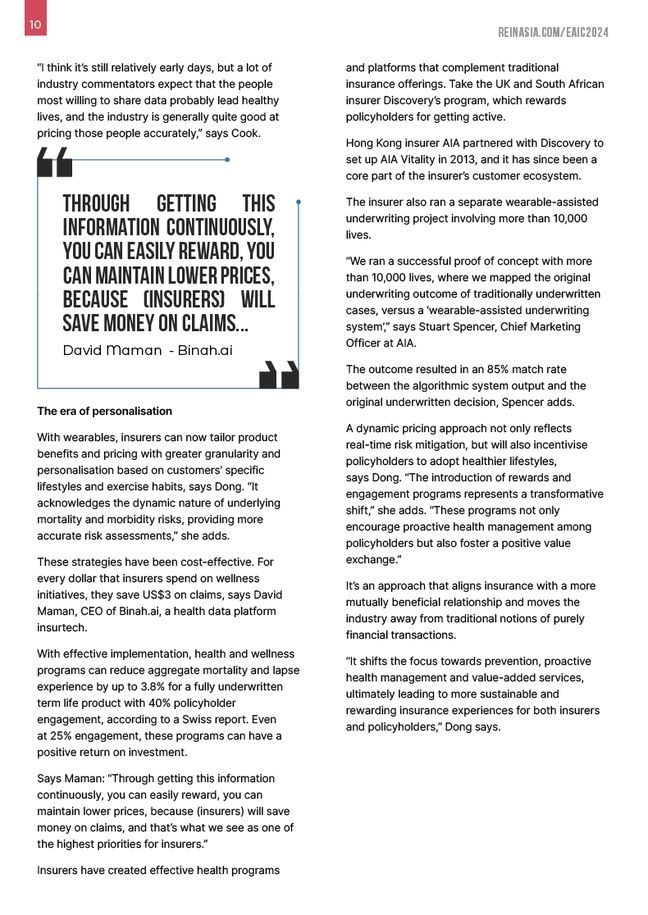
Your leaderboard, at the top of every page.
Before we dive deeper, a word on why (Re)in Asia.
Our journalism is never swayed by commercial considerations.
That is why your name beside it is worth more. Amid an abundance of commercially supported news, our readers come to us for sources that are unbiased and insightful. Partnering with (Re)in Asia puts your brand beside the qualities they value most.
- 2023
- Founded in Hong Kong, for the insurance and reinsurance markets of Asia Pacific
- 40,000+
- unique users a month on average
- 9,000+
- editorially independent stories published
- Every weekday
- (Re)in Brief, our newsletter, in readers’ inboxes
- Almost 25,000
- professionals in our LinkedIn community
- 3,000
- (Re)in Brief subscribers, every one organic: no bought lists, no padding, just engaged readers

Companies we’ve worked with
- AIA
- Allianz
- AXA XL
- Generali
- HSBC
- Manulife
- Marsh Reformerly Guy Carpenter
- Peak Re
- QBE
- SAP Fioneer
- Sun Life
- Swiss Re
- Zurich
- and more
Growth from day one.
In April 2023, the first month of real traffic, 123 people read (Re)in Asia. In September 2026, 45,556 did.
One month can flatter us, so let’s look at a six-month average.
Our audience is the insurance market.
Here are those readers, grouped by company type. Each dot is 100 readers.
By our estimate, the 10% in Other splits into consultants 40%, risk managers 30%, insurtechs 20%, insurance asset managers 10%, as shares of that 10%.
- Singapore23%
- Hong Kong16%
- India13%
- Other Asia Pacific 12%
- Malaysia22%
- Japan20%
- Vietnam18%
- Indonesia10%
- Philippines8%
- New Zealand6%
- Thailand6%
- South Korea5%
- Taiwan5%
- United Kingdom11%
- Australia9%
- China7%
- Rest of world9%
Where our readers are.
Singapore and Hong Kong lead, with India, Australia, China and the rest of Asia Pacific close behind, and the UK, where much of Asia’s risk is placed.
*Source: Google Analytics 4, monthly active users and page views.
Other Asia Pacific, by country
Each country’s share of the 12% of readers in Other Asia Pacific.
- Malaysia22%
- Japan20%
- Vietnam18%
- Indonesia10%
- Philippines8%
- New Zealand6%
- Thailand6%
- South Korea5%
- Taiwan5%
Other, by company type
Each type’s share of the 10% of readers in Other, by our estimate.
- Consultants40%
- Risk managers30%
- Insurtechs20%
- Insurance asset managers10%
What you can put in front of them
- Display advertisingThe leaderboard, the MPU and a newsletter banner, beside journalism our readers trust.
- Dedicated hubsOwn a subject or a market, with your name at the top of its hub.
- Thought leadershipPartner content, editorially-led content and our flagship whitepaper.
- Special print editionsPages in the special editions that travel to the conferences that matter.
Your name at the top of every page.
The leaderboard sits across the top of reinasia.com, beside independent journalism our readers trust.
- Leaderboard, 728 × 90Top of every page. Share of voice from 33% to 100%.
Along for the ride.
On desktop the MPU is pinned beside the story, so it travels with the reader as they scroll.
- MPU, 300 × 250On every article except features, and not where another partner owns a whole segment. Pinned, so it travels with the reader as they scroll.
- Extended MPU, 300 × 600Twice the presence, pinned the same way.
And in their inbox, every weekday.
(Re)in Brief, our newsletter, lands every weekday with the day’s stories. Your banner sits between them.
3,000subscribers to (Re)in Brief
- Newsletter banner, 600 × 75 or 600 × 150In every edition of (Re)in Brief.
Key storiesFeaturesData insightAnalysisPeople movesReinsuranceAPAC insurers look to bridge AI’s reality gap
Regional insurers have proved AI can improve existing processes, but the technology’s full promise lies in the harder work of making it core to how they operate.
By Blake Evans-Pritchard · 19 August 2026

• APAC insurers report measurable gains from AI across claims, pricing, underwriting and customer service. • While gains have been impactful, many stem from improving existing processes rather than changing how a business operates. • Scaling AI across functions, markets and legacy systems is proving harder, and productivity gains have fallen short of expectations. • Key constraints are fragmented data, legacy architecture, and varied regulation across APAC, not the models themselves. • Agentic AI is shifting the question from what AI to build to how the business should be redesigned around it. • Leadership buy-in, governance, and closer business-technology ownership determine whether AI delivers sustained returns.
This is an editorially led article, researched and written independently by (Re)in Asia. It has been made free to read as part of a partnership with SAP Fioneer.
Artificial intelligence has moved beyond experimentation. APAC insurers are reporting tangible gains from applications across claims, pricing, underwriting and customer service.
Yet a tension persists.
The most successful deployments so far tend to share a common characteristic. They improve an existing process rather than fundamentally change how the business operates. But scaling those applications across functions, markets, and legacy systems is proving to be more challenging.
This is becoming even more significant as insurers turn their attention to agentic AI, which promises to coordinate tasks and decisions across entire workflows.
Increasingly, insurers are shifting their focus from looking at what AI they can build to asking the question: ‘How should we redesign the business so AI is at the core of how we operate?’
“AI is transforming our Premier Agency, freeing up time for what matters most: trusted, personalised advice.”
APAC insurers weigh carbon capture growth as cross-border risks, liability gaps test underwriting
China’s low-altitude economy has taken off and its insurers are writing the global underwriting playbook
Australia’s ban on using genetic testing in life insurance takes effect
- IRDAI mulls early-2027 implementation for distribution reforms
- “No insurer can write a big enough cheque”: data centre values too large for any single insurer to cover, says Howden
- CPIC HK’s liquidity improves on cut in high-risk assets as S&P affirms ratings
- Australia cyclone pool incurred claims rise 7.5% to A$1.65bn
- Australia’s ban on using genetic testing in life insurance takes effect
- Hong Kong extends mandatory motor, employees’ compensation cover to Huanggang Port area
- Aviso Specialty forms Capital Solutions Group, names Eric Wojcik head of capital and guarantee solutions
- Eastspring Investments names Pierre-Julien Jandrain new chief risk officer
- Hollard Australia taps Mark Adams as chief risk officer
- HDI Global appoints Kei Kimura as general manager of distribution and marketing
Own the subject your clients care about.
A dedicated hub gathers every story on one subject in one place, with your name at the top, and your own article beside its key stories. Booked for three months at a time.
Example dedicated hubs: Capital management · Cyber · Energy · Life and health · Marine and cargo · Regulation · Reinsurance · Specialty · Technology
- Hub sponsorshipYour logo at the top of the hub, under “Brought to you in partnership with”.
- Editorially-led content, up to 2,000 wordsWritten by our journalists, in your hub.
- Partner content, up to 1,200 wordsYour article, edited into house style, beside the hub’s key stories.
- Hub MPU, 300 × 250On the hub page.
Or own a market.
Country hubs reach the readers in the markets that matter most to your strategy. 23% of our readers are in Singapore.
Example country hubs: Australia · Hong Kong · Indonesia · Malaysia · New Zealand · Philippines · Singapore · South Korea · Thailand
AboutContact usAdvertiseAwardsFree trialSubscribeSearch…Log inMarine and cargo.
Features and key stories »
APAC facultative demand climbs, but margins will be earned on terms
Facultative is evolving from an overflow tool into a strategic one, but with capacity plentiful, reinsurers are being asked to do more for less.
Partner contentWhy Asia’s construction risks no longer stop at the weatherLatest »
Editor’s choice »
All stories »
Meritz Fire & Marine prepares to sell Indonesian non-life insurance unit — reportOctober 7 2026Hyundai Marine & Fire eyes cyber insurance expansion as part of Japan growth strategyOctober 2 2026APAC facultative demand climbs, but margins will be earned on termsSeptember 29 2026India’s maritime insurance pool hits 3,000 cargo war policies as war-risk premiums fall 35-40%September 28 2026Chubb Hong Kong promotes Jeremy Lai and Lulu Tsai to lead cyber and marineSeptember 25 2026China powers Asia’s marine insurance gains as region narrows gap with Europe – IUMISeptember 23 2026ISO-compliant bunker fuel raises stakes for marine insurance claimsSeptember 23 2026HDI Global hires senior property, marine and distribution talent in Hong KongSeptember 21 2026Hong Kong targets captives, ILS and specialty insurance growth under first five-year planSeptember 16 2026BRICS backs reinsurance capacity talks, India offers GIFT City for risk labSeptember 15 2026IUMI Singapore 2025
APAC marine insurance soft cycle to persist until 2027 despite geopolitical risks, tariffsAsia drives global cargo insurance growth but trade fragmentation reshapes risk landscapeMultifold impacts from tariffs, trade barriers dominate IUMI discussionsIUMI 2025 wrap: Marine insurers chart new opportunities amidst changing tides in geopolitics and macroeconomicsMarine insurers urged to harness data for political risk pricingIndependent journalism and market intelligence for Asia’s insurance and reinsurance community.
AboutContact usAdvertiseAwardsFree trialSubscribeSearch…Log inSingapore.

Features and key stories »

MAS sets AI risk management rules for financial institutions, flags underwriting and third-party use
Insurers will face higher transparency expectations under the guidelines taking effect from October 2027.
Partner contentWhy Asia’s construction risks no longer stop at the weatherLatest »
People moves »
 Eastspring Investments names Pierre-Julien Jandrain new chief risk officerOctober 9 2026
 Utmost taps former AIA executive Natalie Yeo as head of HNW underwritingOctober 8 2026
 Mitsui Bussan Pana Harrison appoints Alice Lim as head of general insuranceOctober 7 2026
 AXA XL appoints Paul Gardner as underwriting manager for political risk, credit and bond in AsiaOctober 6 2026
 Great Eastern taps Leah Ng to lead bancassurance and partnershipsOctober 5 2026
Editor’s choice »



All stories »
 Business interruption claims rise 30% annually as fire and nat cat drive losses – AllianzOctober 9 2026Eastspring Investments names Pierre-Julien Jandrain new chief risk officerOctober 9 2026MAS sets AI risk management rules for financial institutions, flags underwriting and third-party useOctober 8 2026Utmost taps former AIA executive Natalie Yeo as head of HNW underwritingOctober 8 2026Singapore to review critical illness definitions in 2027October 8 2026Mitsui Bussan Pana Harrison appoints Alice Lim as head of general insuranceOctober 7 2026AXA XL appoints Paul Gardner as underwriting manager for political risk, credit and bond in AsiaOctober 6 2026MAS considers adding insurance policies to investment list for single-family officesOctober 6 2026
 Singapore Life Holdings swings to SGD34m pre-tax profit in 2025 as Fitch affirms ratingsOctober 5 2026Great Eastern taps Leah Ng to lead bancassurance and partnershipsOctober 5 2026
Independent journalism and market intelligence for Asia’s insurance and reinsurance community.
Thought leadership
Partner content has its own section, high on our homepage, where readers see it as soon as they arrive.
Your words, our audience.
Partner content is written by you and edited into (Re)in Asia house style, then published in the partner content section of our homepage or in a dedicated hub.
- Partner content, up to 1,200 wordsOn the homepage or in a dedicated hub.
Your objectives, our journalism.
Researched and written by one of our journalists, with your experts and other industry experts quoted.
- Editorially-led, up to 2,000 wordsOne month on the homepage.
A whitepaper anyone can read, for good.
Our flagship: a report written by our journalists with you, co-branded with your logo. Our longest-lasting and most impactful thought leadership format.
- Whitepaper, 2,500 to 3,000 wordsHomepage and newsletter for a month. Hosted permanently.
AboutContact usAdvertiseAwardsFree trialSubscribeSearch…Log inFeatures and key storiesView all ›
LatestView all ›
Trending topicsView all ›




Partner contentView all ›
Click to see it
Editor’s choiceView all ›
AboutContact usAdvertiseAwardsFree trialSubscribeSearch…Log inWhy Asia’s construction risks no longer stop at the weather | Your brand
By your spokesperson, your title at Your brand.
Independent journalism and market intelligence for Asia’s insurance and reinsurance community.

Can Asia excel at engineering resiliency amid today’s heightened risks?
Read it on reinasia.com
CEO Forum 2026: Risks outpacing growth in Asia-Pacific
Read it on reinasia.com
Political violence insurance: Asian companies seek stability in multinational solutions
Read it on reinasia.com
Data and dialogue vital as geopolitical risks intensify
Read it on reinasia.comAboutContact usAdvertiseAwardsFree trialSubscribeSearch…Log inWhy Asia’s construction risks no longer stop at the weather
Researched and written by one of our journalists, with your experts and other industry experts quoted.

(Re)in Summary
Independent journalism and market intelligence for Asia’s insurance and reinsurance community.
APAC insurers look to bridge AI’s reality gap
Read it on reinasia.com
How regulation is reshaping insurers’ finance functions
Read it on reinasia.comData and dialogue vital as geopolitical risks intensify
Read it on reinasia.com
Pricing risk for engineering insurance becomes harder as complexity grows
Read it on reinasia.comAboutContact usAdvertiseAwardsFree trialSubscribeSearch…Log inRebuilding
APAC’s healthcare
insurance model
As healthcare affordability reaches a crisis point, markets are exploring more sustainable ecosystems.
Forewords & Key Findings
About this whitepaper
This whitepaper was researched and written by (Re)in Asia with an editorial-first approach.
It is free to read without a subscription through our commercial partnership with Your brand.
In this report01The rising cost of care02No single APAC market03Demand is changing as fast as cost04Move from blunt repricing to precise intervention05Build the healthcare ecosystem, not just the policyTowards a sustainable model
As healthcare costs continue to rise across Asia Pacific, insurers, providers and governments are facing growing pressure to maintain access to quality care while keeping coverage affordable and sustainable.
The challenge is complex. Medical inflation is being driven not only by the rising cost of treatments, but also by ageing populations, increasing prevalence of chronic disease, and greater utilisation of healthcare systems.
There is no single solution. Rather, the sustainability of healthcare insurance depends on a combination of smarter product design, more sophisticated underwriting and more efficient use of healthcare resources.
Finding common ground
Healthcare and its access are such a hot topic. Against the backdrop of an ageing population, advancements in medicine, and growing care expectations, the cost of healthcare has risen rapidly in recent years.
As a stakeholder to the ecosystem, insurers are under the spotlight. Insurers play an important role. They offer products that allow risk pooling, with coverage designed to incentivise good habits and judicious utilisation.
The search for the ever-elusive panacea continues. Your brand is working to find common ground between the stakeholders. This whitepaper offers the platform for dialogue, and Your brand is proud to sponsor it.
Six findings at a glance
The rising cost of care
Healthcare systems across Asia are facing a defining challenge: how to maintain access to quality care as medical costs rise, populations age, and traditional models come under increasing pressure.
While there is no single solution to the affordability challenge, insurers, providers, and regulators are experimenting with new approaches, from smarter product design and prevention-led care to a more efficient use of technology.
The cost of individual treatments is rising steeply, but so too is the underlying demand for care, driven by ageing populations, the growing prevalence of chronic disease and greater health awareness.
According to data from WTW, APAC is facing a particularly acute medical inflation challenge, with costs projected to rise by 14% during 2026. By contrast, medical inflation in Europe and the United States is starting to level off, although it remains high.
“Just as important are behavioural drivers like overconsumption and overtreatment.”Catherine Love SoperHead of Health Southeast Asia, Munich Re
Add to that weak pricing transparency and billing discipline, and you get persistent cost escalation, she adds.
Medical inflation was exacerbated by Covid-19, with utilisation falling sharply during the pandemic, only to rebound later, resulting in a delayed but sustained surge in claims.
Several APAC markets have already taken steps to try to ease the cost burden. In Singapore, new cost-sharing rules for Integrated Shield Plan (IP) riders could cut premiums by about 30% on average, according to the Ministry of Health.
Thailand has introduced compulsory co-payment rules in efforts to rein in spiralling costs. Malaysia has just launched a pilot insurance scheme for more affordable healthcare protection.
Independent journalism and market intelligence for Asia’s insurance and reinsurance community.
In print, at the conferences that matter.
Special print editions travel through the meetings and events where deals are done, such as our SIRC edition in Singapore. Advertorials, interviews and case studies are written by our editorial team.
- Inside front cover, A4
- Inside front cover spread, 2 × A4
- Full page, A4
- Partner content, up to 1,000 words
- Outside back cover, A4
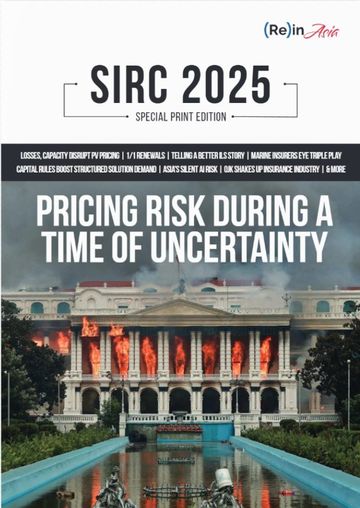
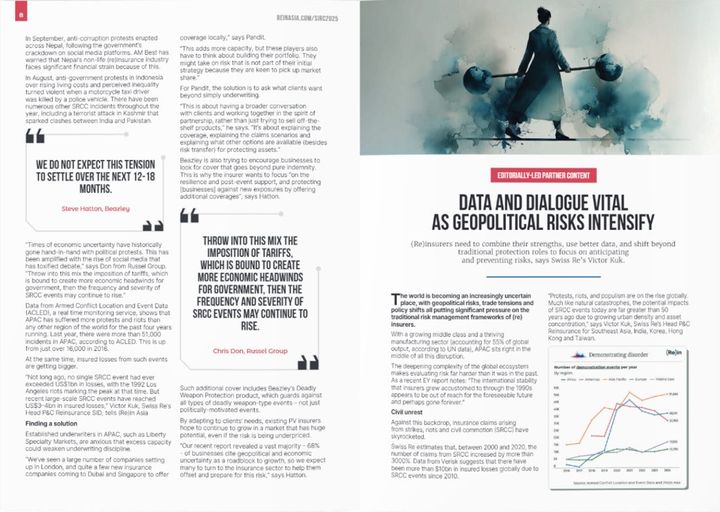
The pages shown are from our SIRC 2025 edition.
Full quarterly reporting.
Every quarter you get a full report: page views and engagement for your hubs and content, impressions and clicks for your ads, and opens for your newsletter banner.

Page views, engagement, impressions and clicks, July to September 2026
Q3 2026 at a glance.
Hub and partner content had its strongest quarter of the year, with 7,040 views, up 57% on the previous quarter. Average engagement was longer than in the first half. Ad exposures rose from 55,400 to 93,200, and clicks rose in line, with the click rate holding steady. The new hub placement had the highest click rate of any placement in its first full quarter.
Monthly page views across all hub and partner content pages.
| Placement | Q3 views | Q3 engagement | YTD views |
|---|---|---|---|
| Hub sponsorship | 4,980 | 1:46 | 9,890 |
| Subtotal · dedicated hubs | 4,980 | 1:46 | 9,890 |
| Placement | Q3 views | Q3 engagement | YTD views |
|---|---|---|---|
| Hub partner content | 2,060 | 2:03 | 4,790 |
| Subtotal · partner content | 2,060 | 2:03 | 4,790 |
Monthly views for each placement.
| Jan | Feb | Mar | Apr | May | Jun | Jul | Aug | Sep |
|---|---|---|---|---|---|---|---|---|
| 610 | 670 | 820 | 750 | 980 | 1,080 | 1,540 | 1,650 | 1,790 |
| Jan | Feb | Mar | Apr | May | Jun | Jul | Aug | Sep |
|---|---|---|---|---|---|---|---|---|
| 210 | 370 | 490 | 440 | 580 | 640 | 470 | 730 | 860 |
Impressions and clicks for each ad.
| Flight | Placement | Impressions | Clicks |
|---|---|---|---|
| Jul to Sep 2026 | Leaderboard 728 × 90, 50% share of voice | 71,400 112,300 campaign to date | 96 CTR 0.134% |
| Aug to Sep 2026 | Hub MPU 300 × 250, in a dedicated hub | 4,700 6,100 campaign to date | 58 CTR 1.234% |
| Flight | Placement | Unique opens | Clicks |
|---|---|---|---|
| Jul to Sep 2026 | Newsletter 62,000 emails delivered | 17,100 Excluding bots | 214 CTR 1.25% of unique opens |
The cherry on top of every partnership.
Here are some unique benefits of working with (Re)in Asia.
1Unlocked links
We unlock a feature that quotes your experts, and you share the link with no paywall in the way.
FeatureAPAC facultative demand climbs, but margins will be earned on terms Unlocked for anyone you share it withUnlocked
2(Re)in Focus
When we interview your people, their words are first in line for this block on our homepage.
(Re)in Focus
“These losses, coupled with those a few years previously, prompted several insurers and reinsurers to withdraw capacity altogether”
Asia’s space growth outpaces local capacity as insurers rebuild after heavy losses Isaac FuenteHead of Aviation for regional transportation, Asia at Lockton
3Market perspective
Send us commentary from your senior leaders and you’ll be prioritised, subject to editorial approval.
Market perspective
 The future of actuarial in an AI-enabled worldJason AlleyneCofounder, Reimagine Risk
 Private markets are no longer about access — they are about integrationEcho YangSenior Solutions Director, Strategic Insurance Group, Aberdeen Investments
 Greater China’s green transition is built on discipline, not speedJulia JuRegional Executive Director, Hong Kong, The Swedish Club
Formats and specifications.
Every format can stand alone or be combined into a campaign. Tell us what you want to achieve and we will put a proposal together.
Display advertising
Thought leadership
Dedicated hubs
Special print editions
Partner benefits
Interested in learning more?
What would you like to do next?
Playfair Media Limited, 17/F, 80 Gloucester Road, Wan Chai, Hong Kong